

 0
0
 0
0
Most people know Invisalign straightens teeth. That’s the part that gets talked about the most: the clear aligners, the discreet treatment, the alternative to metal braces that fits into adult life without making a scene. But the conversation usually stops there, and that means a lot of patients are walking around with problems Invisalign could actually fix without ever realizing it’s an option.
Clear aligner technology has advanced significantly over the last decade. The range of conditions Invisalign can address today goes well beyond simple crowding or minor spacing issues. Many patients who assume they need more invasive treatment, or who have given up on fixing a particular dental concern altogether, are surprised to discover that Invisalign is a realistic option for their situation.
Patients who consult with an Invisalign dentist in Agoura Hills often come in expecting to talk about crooked teeth and leave with a much broader understanding of what clear aligners can actually do. Here are five things Invisalign can fix that tend to genuinely surprise people.
1. Bite Problems That Cause Jaw Pain
Most patients think of Invisalign purely in terms of how their teeth look. But the position of the teeth directly affects how the upper and lower jaws come together, and a misaligned bite can cause real functional problems that go well beyond aesthetics.
Overbite, underbite, and crossbite are all conditions where the upper and lower teeth don’t meet correctly. Over time, these misalignments put uneven stress on certain teeth, the jaw joint, and the surrounding muscles. Patients with untreated bite problems often experience chronic jaw pain, headaches, and accelerated wear on specific teeth without connecting these symptoms to their bite.
Invisalign corrects bite alignment by gradually shifting the teeth into a position where the upper and lower jaws meet more evenly. For many patients, resolving the bite alignment resolves the jaw pain and discomfort that came with it, often without any additional treatment.
2. Gaps Between Teeth That Affect Gum Health
Gaps between teeth are often seen as a cosmetic issue. And while they do affect how a smile looks, they also create a functional problem that most patients aren’t aware of. When there are spaces between teeth, the gum tissue in those gaps lacks the support it needs and becomes more vulnerable to inflammation and gum disease.
Food and bacteria collect in gaps more easily than in areas where teeth sit flush against each other. Without the natural protection that properly spaced teeth provide, the gum tissue in those areas can become irritated, inflamed, and over time more susceptible to the kind of damage that leads to gum recession and bone loss.
Invisalign closes these gaps, which not only improves the appearance of the smile but removes the pockets where bacteria accumulate and gives the gum tissue the support it needs to stay healthy long term.
3. Crowding That Makes Oral Hygiene Nearly Impossible
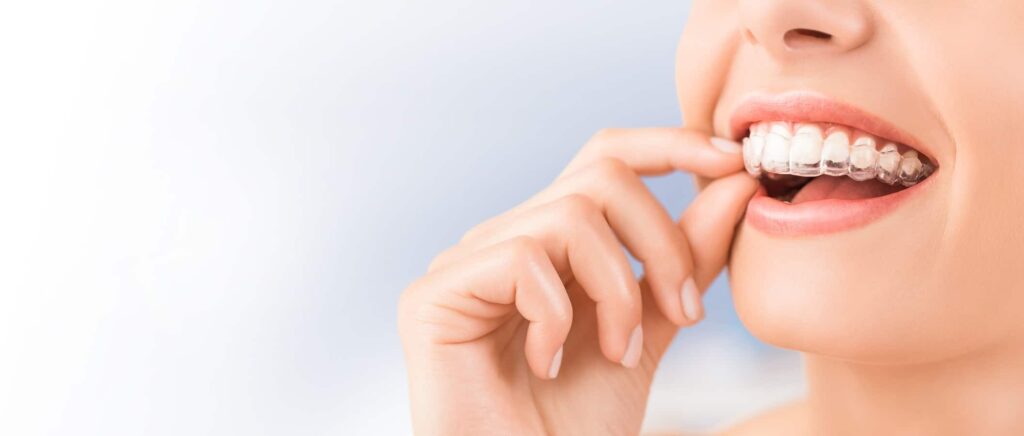
Crowded teeth are one of the most common reasons patients seek Invisalign clear aligner treatment. But most people think of crowding as a cosmetic problem without fully understanding the oral health implications.
When teeth overlap and crowd each other, toothbrush bristles and floss can’t reach all the surfaces that need cleaning. Plaque builds up in areas that can’t be properly accessed, which leads to decay and gum disease in the spots that are hardest to treat. Patients with significant crowding often have recurring cavities in the same areas despite brushing and flossing regularly, simply because those areas aren’t reachable with standard hygiene tools.
Straightening crowded teeth with Invisalign opens up the spaces between them, making every surface accessible to cleaning tools. Many patients notice a significant improvement in their overall oral health after completing Invisalign treatment, not just in how their smile looks.
4. An Open Bite That Affects Speech and Chewing
An open bite is a condition where the front teeth don’t come together when the mouth is closed, leaving a visible gap between the upper and lower front teeth even when the back teeth are in contact. It’s a condition that affects both function and appearance in ways that can be quite significant.
From a functional standpoint, an open bite makes it difficult to bite through certain foods, affects how the tongue moves during speech, and can contribute to a lisp or other speech patterns. From a cosmetic standpoint, the gap between the front teeth is visible when smiling and speaking in ways that many patients find difficult to accept.
Open bites were historically considered one of the more challenging orthodontic cases. Modern Invisalign technology has significantly improved the ability to treat open bites with clear aligners, making it a viable option for many patients who assumed they would need more invasive treatment to address it.

5. Relapse After Previous Orthodontic Treatment
This one surprises a lot of people. Many adults who had braces as teenagers find that their teeth have shifted back toward their original positions over the years, either because they stopped wearing their retainer or because natural changes in the jaw and bite caused gradual movement over time.
This shifting is called orthodontic relapse, and it’s more common than most people expect. For patients who went through the full experience of metal braces as a teenager only to watch their results slowly disappear as adults, the idea of going through braces again is understandably unappealing.
Invisalign is often an ideal option for relapse cases. The shifts that occur over time are usually less severe than the original misalignment, which means treatment times tend to be shorter. And because clear aligners are virtually invisible and removable, patients can correct their relapse without the disruption and visibility of traditional braces.
Here is a quick summary of what Invisalign can address beyond basic crowding:
- Overbite, underbite, and crossbite affecting jaw function and comfort
- Gaps between teeth creating hygiene and gum health problems
- Crowding that makes thorough cleaning difficult
- Open bite affecting speech, chewing, and appearance
- Orthodontic relapse after previous treatment
Why the Provider Makes the Difference
Understanding what Invisalign can fix is one part of the equation. The other part is making sure the treatment is planned and executed by someone with the experience to handle your specific case well.
Not all Invisalign cases are equally straightforward. Bite corrections, open bite treatment, and relapse cases all require careful planning and a provider who understands how to use the aligner system to its full capability. A premier Invisalign provider has the clinical volume and case diversity to handle these more complex situations confidently, which translates to more predictable outcomes for patients.
If you’ve been told Invisalign isn’t an option for your particular concern, it’s worth getting a second opinion from an experienced provider. The technology has advanced considerably, and what wasn’t possible a few years ago often is today.

Agoura Advanced Dentistry serves patients across Agoura Hills, Calabasas, Westlake Village, Thousand Oaks, Oak Park, and Malibu. Call us or visit our website to book your Invisalign consultation today.
FAQs
Can Invisalign fix bite problems as well as appearance issues?
Yes. Invisalign can address overbite, underbite, crossbite, and open bite in addition to crowding and spacing, making it a functional as well as cosmetic treatment option.
How do I know if my case is suitable for Invisalign?
A consultation with an experienced provider is the best way to find out. They will assess your teeth, bite, and bone structure and give you an honest recommendation based on your specific situation.
Is Invisalign effective for treating orthodontic relapse?
Yes, in many cases. Relapse shifts are often less severe than the original misalignment, which means Invisalign can frequently correct them in a shorter treatment time than the original orthodontic work required.
Does Invisalign help with gum health?
Indirectly, yes. Closing gaps and straightening crowded teeth makes thorough cleaning easier and removes the pockets where bacteria accumulate, which supports better gum health over time.
How long does Invisalign treatment take for these less common cases?
It depends on the complexity of the case. Some conditions like mild relapse can be treated in as little as a few months. More complex bite corrections may take twelve to eighteen months or longer.
Find Out What Invisalign Can Do for Your Smile
Most people underestimate what clear aligner therapy is capable of today. A consultation is the best way to find out whether Invisalign can address your specific concerns, whether they’re cosmetic, functional, or both.


About The Author




More Stories
Eco-Friendly Weed Control in Red Deer: Safer Options for Families and Pets
Romantic Fine Dining in Banff: Where to Celebrate in the Canadian Rockies
How a Tow Truck Company in Vista Handles Accident Recovery?